
The Lotus Question:
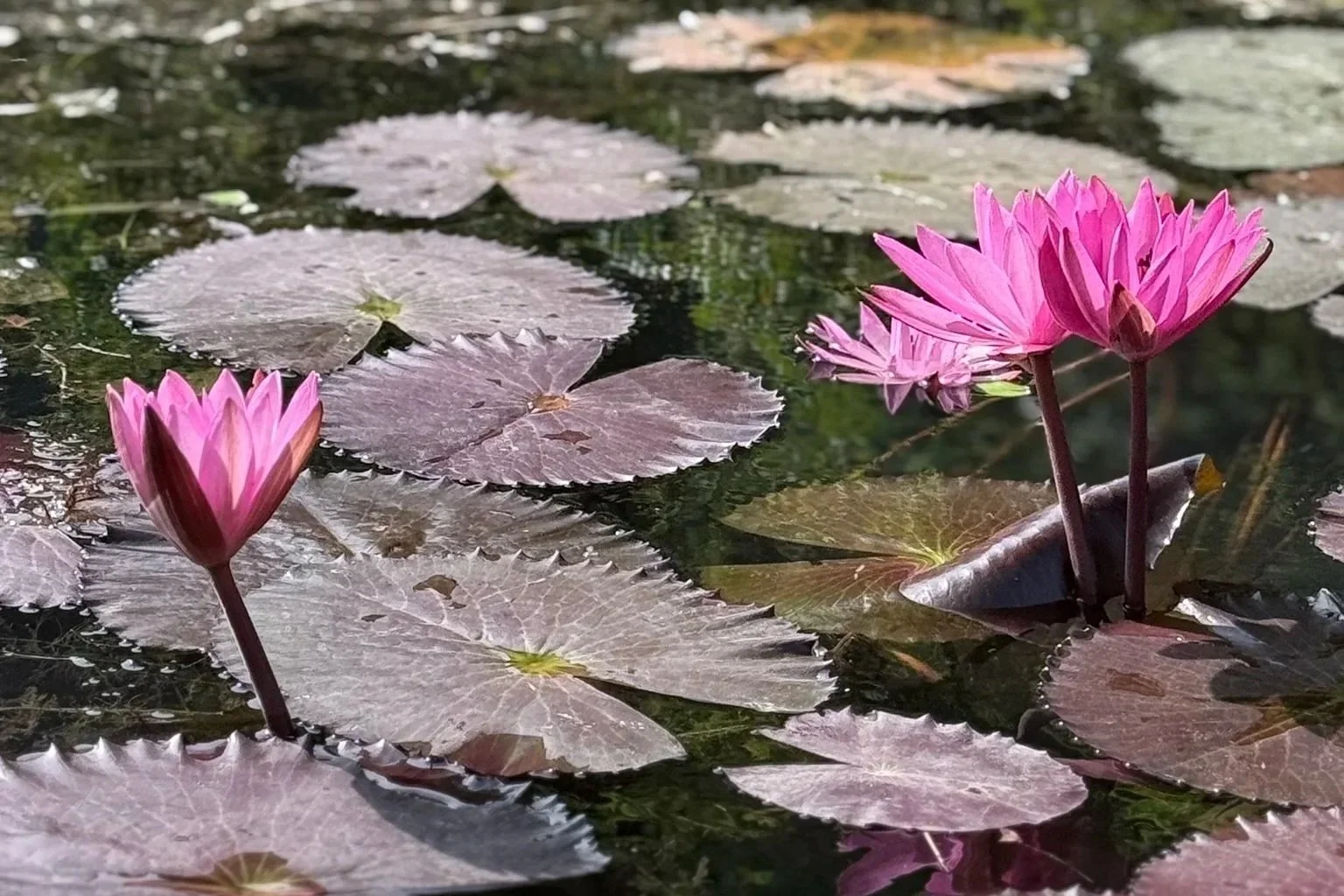
The Lotus
Travel has a way of revealing how quickly we make assumptions. Not malicious assumptions and not even careless ones. Often they come from believing we understand something when we actually have not taken the time to listen yet.
One small moment in Vietnam reminded me of that.
I was sitting with a Vietnamese guide during one of our many conversations about culture, history, and daily life. At some point we started talking about the lotus flower. If you spend any time in Vietnam, you notice it everywhere. It appears in temples, art, carvings, textiles, and architecture, and travel books often describe it as the national flower.
So I asked what felt like a straightforward question. I asked him whether the lotus was Vietnam’s national flower.
He smiled and shook his head.
He explained that Vietnam does not have a national flower. The reason, he said, is that Vietnam is home to many different peoples, tribes, languages, and cultures. Naming one flower as the national symbol would suggest that one tradition or meaning represented everyone, and that is not how they think about identity. Instead, they respect that different communities carry different traditions and interpretations.
Then he began describing the lotus itself. There are many varieties of lotus across Vietnam, and the flower can carry different meanings depending on who you ask. For some people it represents purity because it grows out of muddy water and still blooms beautifully. For others it is connected to Buddhism. For some it simply reminds them of ponds, fields, and childhood memories.
The more he spoke, the more I realized that the interesting part of the conversation was not the flower. It was the assumption behind my question.
I had assumed there must be a single answer.
That instinct is common in the work many of us do. We often search for tidy explanations that help us feel like we understand a place, a culture, or a community. We want to identify the symbol, the story, or the strategy that represents everyone.
But culture rarely works that way.
In professional settings we often talk about cultural competence as something to achieve. The language suggests that with enough training or exposure we can become competent in someone else’s culture, as if culture were a subject that can be mastered.
The reality is much more complex.
Culture is layered, evolving, and deeply personal. Even within the same country, region, or community, people experience it differently. Traditions carry different meanings depending on family history, geography, religion, and lived experience.
Cultural humility offers a different way of approaching this reality. Instead of suggesting that we can fully understand another culture, it invites us to remain curious and open. It asks us to recognize that our perspective is always partial and that the people who live within a culture hold knowledge we may never fully possess.
Cultural humility requires listening before interpreting and asking questions before forming conclusions. It also requires a willingness to let go of the idea that there will always be a single, clear explanation.
That conversation about the lotus was a reminder of that distinction. My question reflected a competence mindset. I assumed there must be a clear answer that I simply needed to learn. His response reflected humility. It made space for the reality that meaning can differ depending on who you ask.
This lesson extends well beyond travel.
In leadership, philanthropy, and community engagement, it is easy to believe that research, expertise, or past experience gives us a complete understanding of the people we hope to serve or partner with. Those sources of knowledge are valuable, but they are never the whole picture.
Cultural humility encourages us to approach communities with curiosity rather than certainty. It invites us to ask how people understand their own experiences rather than assuming we already know the answer. It reminds us that listening is not simply a step in the process but a practice that should continue throughout the work.
The moment with the lotus stayed with me because it quietly challenged a very common habit. What I expected to be a quick cultural fact turned into a deeper reminder about the limits of our assumptions.
Sometimes the most respectful and effective thing we can do is acknowledge that cultures, communities, and people rarely fit the tidy explanations we hope to find.
And sometimes that realization begins with something as simple as a question about a flower.
